Sunday, February 24, 2019

Minnesota Birds -23 degrees +5 Lifers


We came, we saw, we froze, and then we left!!!  It's time for another great birding adventure with gang out into the great cold & white open. In order for me to see new life birds, I have to travel to different places, different times of the year . . . so the chase was on to Minnesota.

With schedules getting booked, the best time we could visit was late January 2019. We flew from Covington, KY to MSP direct on Delta, landing at 8am CST on a Friday.  It was cold, but sunny.  After getting the rental and breakfast, we had a 2 hour drive to Duluth.


We tried for some Duluth birds, like the reported Tufted Duck, King Eider, Bohemian Waxwing & Northern Goshawk, but to no avail.  The cold had frozen the lake, so no chance of ducks.  Then we drove up & down Knife rd, but no luck with waxwings or goshawks. I only saw 9 species of birds the first day. It's cold here!  So off to the hotel for check-in and sleep, tomorrow is going to be all BOG!!

From Duluth, it's only a 30-40 min drive to the BOG, too bad it's negative 20 degrees this early in the morning.  We used the map and driving tour guide to follow. It's a great resource for any birders first time at the BOG.  Here is the link: https://saxzim.org/plan-your-visit/


Dawn at BOG

Its COLD


Starting at the Warren Nelson bog, we missed the Black Backed Woodpecker, she was there, seen by others, but I just never got to see her.  So we left and visited some feeder stations.   From there we headed up Rt 29 to the next feeder stations . . . . and finally . . . . much needed


Pine Grosbeak, #613

Female & Male PIGR

LIFE BIRDS!!! Both several Pine Grosbeaks and Sharp-tailed Grouse where patiently feeding at the stations.  Hey this map thing works.

Sharp-tailed Grouse, #612
A chicken-like bird of open prairies and parklands, the Sharp-tailed Grouse uses a wider variety of habitats than its close relatives the prairie-chickens. Short, pointed tail, white at base.

The grayish bodies of Pine Grosbeaks are decked out in pinkish reds on males and yellows on females. They easily crush seeds and nip off tree buds and needles with their thick and stubby bill. Pine Grosbeaks inhabit open spruce, fir, and pine forests as well as subalpine forests. In winter they tend to use mountain ash, maple, and ash forests with abundant seeds.


OK, got the pressure off now, two life birds, with more to come!!  Off to the visitor center now.  It was not open yet, but the feeders had several more PIGR, Common Redpoll, Pine Siskins to photo.

By now we had traveled up to ZIM rd., and where coming back south down McDavitt Rd., in hopes of hawk owl spot.  We spotted 6 cars parked on the road. Again it was COLD.  Only two cars had people in them, the other where empty. So we loaded up the gear, and started walking on this winter path east.  We finally passed some birders, who said "yea--it's there just keep walking". OK, it's COLD but we keep walking this narrow snow path. Once we made the turn, there up in a tree . . .


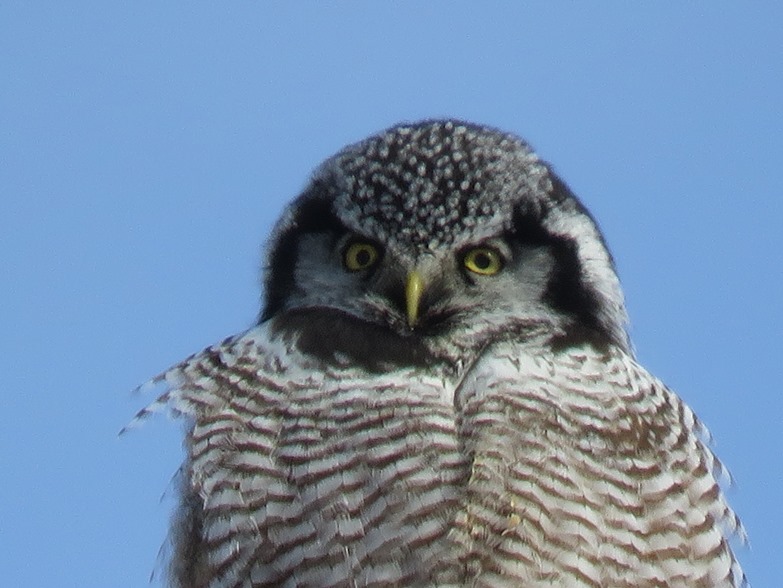
Northern Hawk Owl, #614

Hey, looky here

Lifer for ALL birders who brave

A bird of boreal forests, the Northern Hawk Owl behaves like a raptor, but looks like an owl. Its oval body, yellow eyes, and round face enclosed by dark parentheses are distinctly owl. Its long tail and habit of perching atop solitary trees and hunting by daylight, though, are reminiscent of a raptor. It is a solitary bird that tends to stick to the boreal forest, but some winters it moves south into the northern United States delighting birders near and far.

OK, WOW. What a journey, such fun to share the experience with friends and birders, but now its back to the car, because it's COLD.

Now we head down to Sax Rd., then back north on Admiral Rd. to the world famous "Admiral Feeders".  A spot that has been know of for years and most reliable for Boreal Chickadee. We pull up, and there's about 10 cars, about 30 birders, all real close to the feeding station. I walk up and ask a guy about our two target birds . . . and he points and says "yeah, they are right there" . . . .

Canada Jay, #615

Boreal Chickadee. #616

Admiral rd. feeders


The deceptively cute Canada Jay is one of the most intrepid birds in North America, living in northern forests year-round and rearing chicks in the dark of winter. Highly curious and always on the lookout for food, Canada Jays eat just about anything, from berries to small animals.

A brown-capped chickadee of the northern boreal forest, the Boreal Chickadee is one of the few birds living completely within that biome in Canada and bits of the United States. Brownish gray overall with a brown crown, small white cheek patch, and cinnamon flanks.

And with that, the life bird train came to a close.  We missed several other lifers for me, but that only give me a reason to travel the county and come back to the BOG in the future.


Evening Grosbeak

Northern Shrike

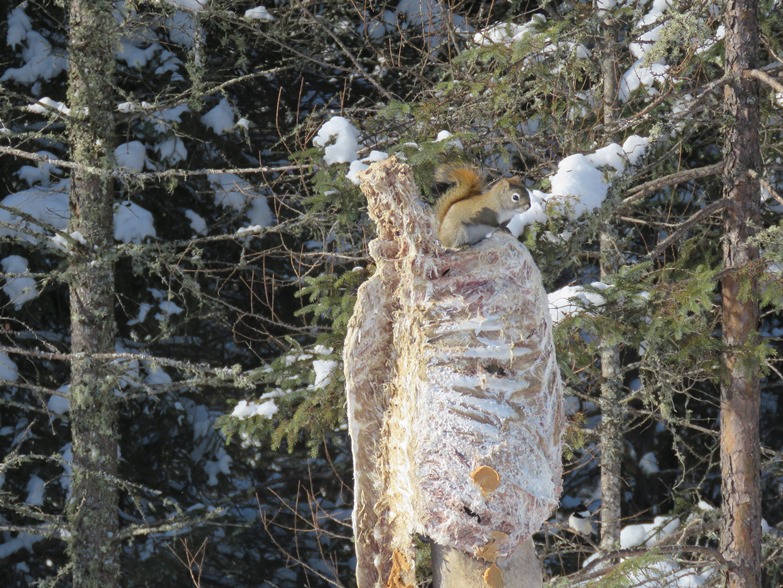
Squirrel and Rib cage meat

Mary Lou's feeding station
 Trip stats:
31 species
5 life birds
-40 degrees w wind chill
740 miles driving
Never about 0 degrees


Lifers Missed:
Black-backed Woodpecker
Bohemian Waxwing
Northern Goshawk
Hoary Redpoll
Boreal Owl


Sunday, January 6, 2019

#BigYear2018 in review

Happy New Year!!! 2019, can you believe it? Wow has the time gone by fast.  This post is a recap of the year that was #BigYear2018, all the fun stuff, places visited, good times and future plans. Below are some of the highlights.

Seattle in August for Pearl Jam & Birds


Corn Creek, NV at daybreak

2018, Team Vape May Warbler


  • 7 lifers--Wow!! I had a good year, 2017--18, 2016--12, 2015--13 new and in 2014 I had 29 lifers. I traveled to Nevada +3 in springtime and Washington +3 in summer, which produced new birds. Ohio produced +1 new lifer!! I am still thankful of the trips taken, birds seen, and friends I've been with making memories and good blog posts! Thank you all and God Bless. That puts me at #611 Life Birds.                                                                                                                    
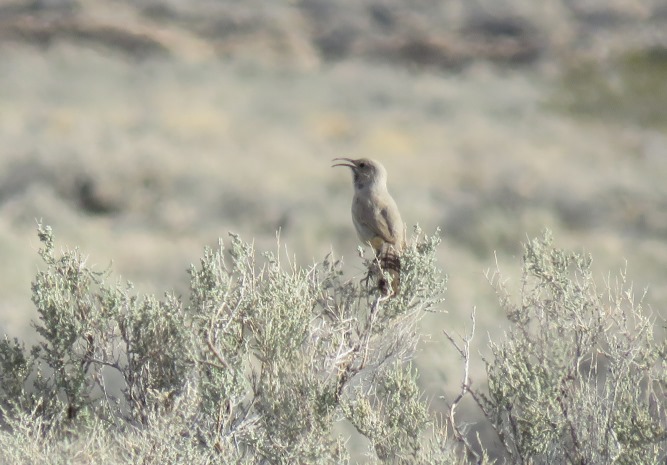
  • My ABA Bird of the Year is . . . .the code 2 LeContes &  code 1 Sage Thrashers during my Nevada trip. None of my life birds where "rare" Code 3 or higher, so I wanted to choose these two that I've been wanting to see in a while. All the thrashers I needed where out west, so I got a reason to travel. Now, just the Bendire's Thrasher is all I need.


LeContes Thrasher #607

Sage Thrasher #608


  • My Ohio Bird of the Year is . . . .the code 1 Iceland Gull Finally I nabbed this seagull. It's been 2-3 years waiting for a cold Ohio winter to see this bird. The ABA lumped the Thayers & Iceland together, just making one countable, the Iceland Gull.  It's known as the "white-winged" gull family.  We traveled to Dayton in January and spent close up time with this guy.
Iceland Gull, Dayton Lifer #605

Some more great Ohio birds I saw.  Only 2nd time ever Harris Sparrow, and 3rd time ever Kittiwake. Finally saw the Northern Shrike here in Ohio, second time ever too.


Harris Sparrow, Newark, OH Jan.

Black-legged Kittiwake, Hoover Dam, OH


Northern Shrike in Ohio


King Rail


  • 6 states visited--Ohio(170 birds), Texas(137 birds), Nevada(+15 foys), Washington(+15 foys), Florida(+12 foys), South Carolina(+4 foys)
  • 353 total species--Finishing it strong!! I beat my average by 1 1/2 birds.  I ticked many Ohio common birds this year. This puts me at a 351.5 species per year average over 6 years. STATS.  In 2013--338; 2014--359; 2015--322; 2016--360; 2017--377; 2018--353

Salineno, Texas boarder


Kirtland Warbler, Ohio


Below is a list of some of the new first of year birds(FOYs) I saw in Ohio, during the last 45 days of birding in 2018.

#342 Black Legged Kittiwake
#343 Winter Wren
#344 Fox Sparrow                                                           
#345 Red-necked Grebe
#346 LBBG
#347 White-winged Scoter
#348 Surf Scoter
#349 Short Eared Owl
#350 Northern Shrike
#351 Black Scoter
#352 Rough-legged Hawk
#353 Sharp-shinn Hawk


**heard only 2018**
Eastern Whip-poor-will, Sandhill Crane, Yellow-billed Cuckoo, American Bittern, Bells Vireo, Sedge & Cactus Wrens, Northern Waterthrush, Kentucky warbler
 

Rarities seen in 2018--
             Code 4 Blue Bunting--male  LRGV

             Code 3  White-collard Seedeater--seen in LRGV, Texas 


White Collard Seedeater


  • Misses--many of them, especially Ohio species. I  birded OHIO, but missed some easy ones. Getting out every Sunday since May helped me see/hear them, so I'm thankful. So in 2019, my goal will be to get them early and keep trying.  Misses included: 
        Snow goose, Cackling, Tundra, Northern Pintail, Greater scaup, LTD, RT Loon, Least, Yellow-bellied & Alder empidx., Franklin's Gull, Black Tern, BlackBellied Plover Buff-breasted, White-rumped Sandpiper, Baird's SP, Long-eared Owl, Philly Vireo, Connecticut, Mourning warblers, Nelsons Sparrow, Purple Finch, Lapland LS, Snow Bunting.
 

  • 2019 trips--So far two planned trips, but likely some to follow. 
           1. January--Duluth/ZaxSimBog, MN--lifers needed about 11 birds;  Owls, grosbeaks, waxwing, 2 woodpeckers and other winter specialties 
           2. February--San Clemente, CA--birding is southern Cally again
           3. Ohio--Biggest week in American Birding--you know where to find us in May
           4. Hawaii, maybe--for 15th wedding anniversary
           5. Las Vegas--Gotta go to Vegas once a year, anytime?? 
           5. Chase a rarity. Can this be the year of a Code 4 or 5 chase??


Next up: Let's start off #BigYear2019 with a cold trip to Minnesota 


Thursday, August 30, 2018

Pearl Jam & Birds!!


Thanks to Eddie Vedder and the gang, I was given another reason, to travel the country . . . and hear live music, hang with friends, and of course see LIFE BIRDS!!!!

It is early August in the Pacific Northwest 2018. This is my seventh year coming to Seattle to see my best friends and getting a chance to bird.  Since we won tickets to both nights for the Home Shows, there was no way I was not going. And since this will be my last annual trip to Washington, lets make it count!! Even thou this was a fun trip, I still managed causal birding at local hotspots, and managed to see many new First of Years(FOYs) and that included + 3 life birds.  So here we go.

Wednesday 8th morning, I hung out in Edmunds, visited all my local spots, the Edmunds Marsh & Pier, Marina Beach, Brackets Landing & Ferry dock. Since it was August all the waterbirds are still up in Canada, so no Scooters or Cormorants.

Smile!!

Pigeon Guillemot


FOYs
Heermanns' Gull--pier
Glaucous-winged Gull
Pigeon Guillemot
Rhino Auklet
Black-capped Chickadee--marsh


Then that night was Pearl Jam Show #1 Section 220 Club

Long Road, opening song
 
Center of the Universe


 After a day off Thursday for recovery, I wanted to make Friday 10th a great day. So with plans to catch the 6:20 am ferry over to Kingston, then 40 mins drive to Gardiner Beach on Discovery Bay. This is the place in lower 48 to see and count Northwestern Crow . . . and I did just that!!

Boats away

Northwestern Crows lifer #609

Look, Birds!!


A small crow of the northern Pacific Coast, the Northwestern Crow is becoming quite at home in urban areas as well as along the shore.


FOYs
Northwestern Crow #609
Western Sandpiper--marsh behind crow
Pelagic Cormorant--pier
Mew Gull--pier
Red-neck Phalarope--point no point
Brewer's blackbird--car trip back


Then that night was Pearl Jam Show #2 Section 241 Club


All the favorites, 34 songs last night


Saturday was another off day. Hanging out in Edmunds, lunch in town, then watching pre-season Seahawks football, nice Italian dinner of sausages & peppers, onions, pasta.

Then last day, Sunday 12th. I'm flying out at 8pm at night, so lets make today count!! Through my years visiting Seattle, and doing guided walks at Discovery park, I've make FB friends with local bird guides/fun people, you know. And whom else to see life birds with? Thanks Niel & Caroline👏 for all you do. I owe you one.

Vaux's Swift, Life Bird #610

2400 roosted that night/morning

A bird of the Pacific Northwest, Vaux's Swift spends almost all of daylight hours in the air foraging for insects.Vaux's Swift is the smallest swift in North America. Swifts roost communally, by the hundreds or sometimes the thousands, presumably to conserve heat.

California-scrub Jay, #611
 FOYs
Vaux's Swift #610--Monroe, WA; known roosting sight
California Scrub-Jay #611--Upper Queen Anne park, Juvi's
Bushtit--Magneson Park
Chestnut-backed Chickadee--Niel's house


The “blue jay” of dry lowlands along the Pacific seaboard, the California Scrub-Jay combines deep azure blue, clean white underparts, and soft gray-brown. It looks very similar to the Woodhouse's Scrub-Jay (they were considered the same species until 2016), but is brighter and more contrasting, with a bold blue breast band.

I saw the Woodhouse SJ in Vegas in March, on the mountain at Lee Canyon, an FOY. 

With that, I came . . . I saw . . . I conquered!!!! 
Trip stats:
56 birds
15 FOYs
3   LifeBirds
2  Pearl Jam shows(11 lifers now)

Thank you and good night from Seattle, a little Pearl Jam "Yellow Ledbetter"

https://www.youtube.com/watch?v=dP0GRxrIcYk


Sunday, May 20, 2018

Spring Break 2K18 part 2


All aboard . . . . second leg of Spring Break 2018 tour, next stop . . Las Vegas, NV!! During March, it is a great time to travel to Nevada. Certain birds spend the winter there, before traveling north. So, with Texas in the books, and no life birds added to 2018, let's spend 48hrs in Las Vegas and Gamble.

Daylight at Corn Creek
Monday AM: Desert Wildlife NWR
Virginia Rail, Verdin, Townsend's Solitaire, Phainopeopla, Cassin's Finch, Common Raven

The park now has 2 resident Coopers Hawks, nesting pair. So birding is light to say the least. After a quick loop and hearing 2 Virginia Rails calling in the reeds, we headed back out of the park, down the long road to the highway.  While driving, we saw sparrow type birds fly down in the shrubs, we pulled over to look. Then a lady in a first generation Honda CRV SE, stopped and asked if we where birding. Well, YES!!


 She pointed us down towards the "town" rd. Said to park there, and walk north on the dirt road/north tract, and the desert birds will be calling.  And sure enough, once we got out of the car, we could hear the distinct call of a thrasher.
LeConte's Thrasher, lifer #607

SageBrush Sparrow, lifer #606

While tracking down and getting close to the thrasher, several sparrows where popping up and running on the ground.  These are the recently split "Sage Sparrow" into two species now. The inland California/Nevada birds are call "SageBrush Sparrow"(lifer #606) and the coastal California birds are now called "Bell's Sparrow". Which I still need now. So Bam!! Another good luck of fortune, thank you CRV lady.  --Note**Honda CRV & Subaru vehicles are good signs they are BIRDERS.

Now, with 2 new lifer birds under the belt, it's time to race to the mountain!!! Going from the dessert of 3200 ft elelvation straight up to over 8000 ft, follow that road.

It's Cold up here

Western Bluebird

Mountain Chickadee, note the black bib

Clark's NutCracker, 2nd time only!!
Monday Noon: Lee Canyon, Camp pulloff, Deer Creek
Stellar's Jay, Western Shrub Jay(Woodhouse now), Clark's Nutcracker, Mountain Chickadee, Pygmy Nuthatch, Red-breasted Nuthatch

Mt. Charleston

Monday 3pm: Floyd Lamb City Park
Say's Phoebe, Ross Goose, Rudy Duck, Gambel's Quail, California Gull, Anna's Hummingbird 


Day 2 Tues AM: Spring Mountain Ranch/SR59 North 2nd pulloff on left
Red-naped Sapscker, Violet Grn Swallow, Juniper Titmouse, Catus Wren(h), Rock Wren, Bewicks Wren, Amerian Pipit, Spotted Towhee, Sage Thrasher

Tuesday morning, while waiting for the 8am open to Spring Mountain Ranch park, we birded the two pull offs north, off SR59. West side toward the Rainbow Mountains. Saw and heard Shrub Jay, White-crown sparrows, but at the second one, this thrush like bird was running along the ground.
Sage Thrasher, #608

runs stealthily through the brush


BAM!! Sage Thrasher. Lifer!! Just the bird I was looking for.  This smallest of the thrashers is a widespread denizen of the West’s vast sagebrush steppe. Sage Thrashers are furtive creatures that hunt for insects beneath a protective sagebrush canopy.


Ash Tree forest, Spring Mt. Ranch

Spotted Towhee

Rock Wren, duh!?!


Tues 10am: Henderson Birding Preserve 
Eared Grebe, Bufflehead, Costa's Hmbrd, Black-tailed Gnatcher

Henderson BP parking lot

Costa's Hummingbird


Vegas Baby!!


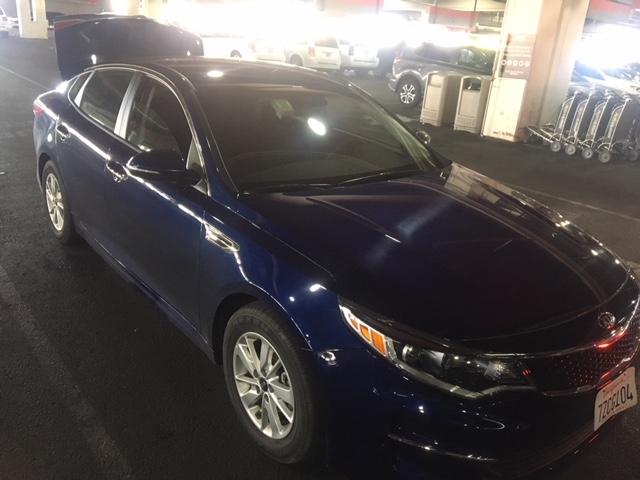
I finished my 48 hrs in Las Vegas with 76 total birds, with +3 Lifers!! So yes it was worth it. I'd like to thank my birding pal JK, MGM hotels for comps, Kia Optima for a good rental, Inn N Out burger for yummy cheap lunch and SouthWest Airlines for making Spring Break 2K18 a success.


KIA Blue


Next up: Spring time in Ohio, warblers, vireos, flycatchers, sandpipers . . oh MY!! 

#2025 Big Year in Review

  Happy New Year!!!  2026 , can you believe it? Wow has the time gone by fast.  This post is a recap of the year that was  #BigYear2025 🐦🐦...